Laboratório de Inflamação Pulmonar

Publications

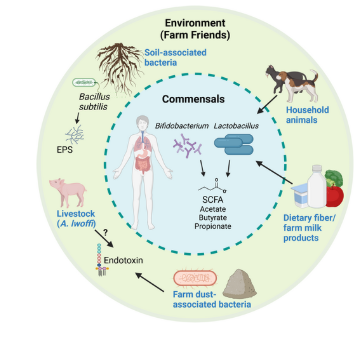
Harnessing the Farm Effect: Microbial Products for the Treatment and Prevention of Asthma Throughout Life

This article is a literature review on the protective effects of rural environments on asthma and allergies. It describes important findings from the literature on how rural environments can modulate the microbiota and, consequently, the immune system.
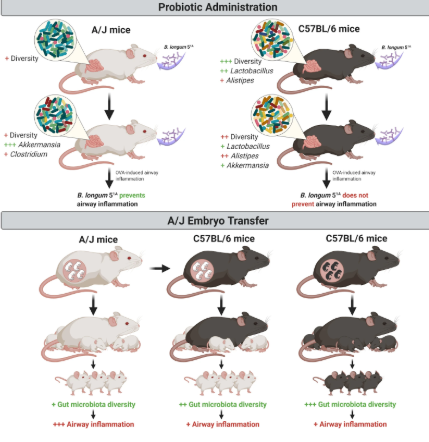
A probiotic has differential effects on allergic airway inflammation in A/J and C57BL/6 mice and is correlated with the gut microbiome

This was one of the most important articles from our group. At a time when probiotics are widely available on supermarket shelves and consumed indiscriminately, we demonstrated, using an experimental model, that uncontrolled probiotic use in allergic asthma can have distinct effects: beneficial for some individuals, but potentially harmful for others.

Prophylactic Supplementation of Bifidobacterium longum 51A Protects Mice from Ovariectomy-Induced Exacerbated Allergic Airway Inflammation and Airway Hyperresponsiveness

This article demonstrates that an acetate-producing probiotic can prevent asthma exacerbation during menopause. In addition, we present a novel experimental model for studying asthma exacerbation in this context.


Exogenous acetate mitigates later enhanced allergic airway inflammation in a menopausal mouse model

In this article, we demonstrated that the administration of exogenous acetate can reduce asthma exacerbation during menopause in an experimental model. Acetate, a short-chain fatty acid produced by the gut microbiota, is able to reach the lungs. In our study, we observed that preventive treatment with acetate exerted a beneficial effect on lung health.


Microbiota derived short chain fatty acids promote histone crotonylation in the colon through histone deacetylases

Esse estudo mostra uma "conversa" entre a microbiota intestinal e o epitélio do intestino. Descreve a crotonilação de histonas no intestino, uma mudança epigenética, modulada pela produção de ácidos graxos de cadeia curta produzidos pela microbiota intestinal.

Allergen Exposure in Lymphopenic Fas-Deficient Mice Results in Persistent Eosinophilia Due to Defects in Resolution of Inflammation

Overall, our results suggest that in humans, a temporary decrease in certain types of immune cells (lymphocytes), as well as individual characteristics such as genetic variations in a gene called Fas, can significantly influence how the body responds to inflammation in the lungs.

Complete list of published work in: